
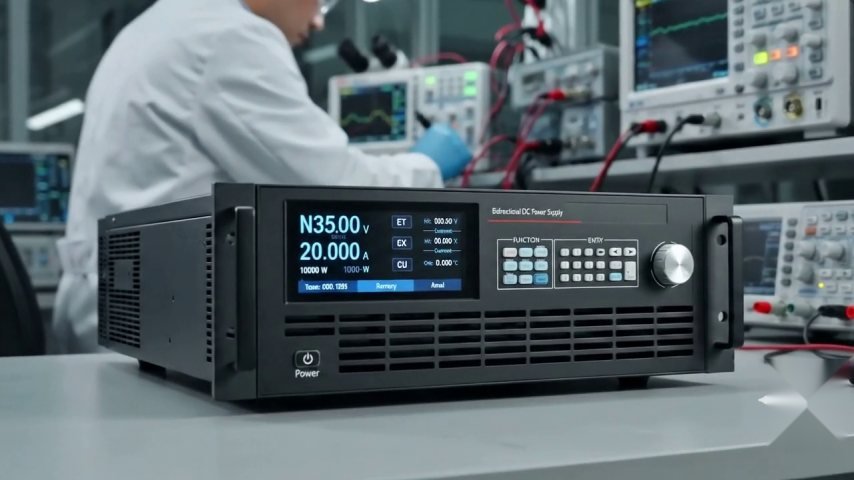
A bidirectional DC power supply both sources and sinks current from a single instrument. Operating in two quadrants, it charges a device under test like a power supply and discharges it like an electronic load — switching seamlessly between the two without overshoot.
Source and sink in one box
Conventional benches pair a supply with a separate electronic load. A bidirectional unit merges them, so a battery, inverter or converter can be charged and discharged in one continuous profile — essential for realistic EV, ESS and PV test.
Why regeneration matters
When the unit sinks power, a regenerative design returns that energy to the grid at up to 93% efficiency instead of dissipating it as heat. Over continuous cycling that means a smaller energy bill, less cooling, and lower total cost of ownership.
When to choose one
Pick a bidirectional supply for battery cycling, EV charger and OBC/BOBC test, PV inverter test, energy-storage PCS validation and motor-drive regenerative braking.
FAQ
Is bidirectional the same as regenerative? Bidirectional means it sources and sinks; regenerative means the sink energy returns to the grid. The N35500 is both.