
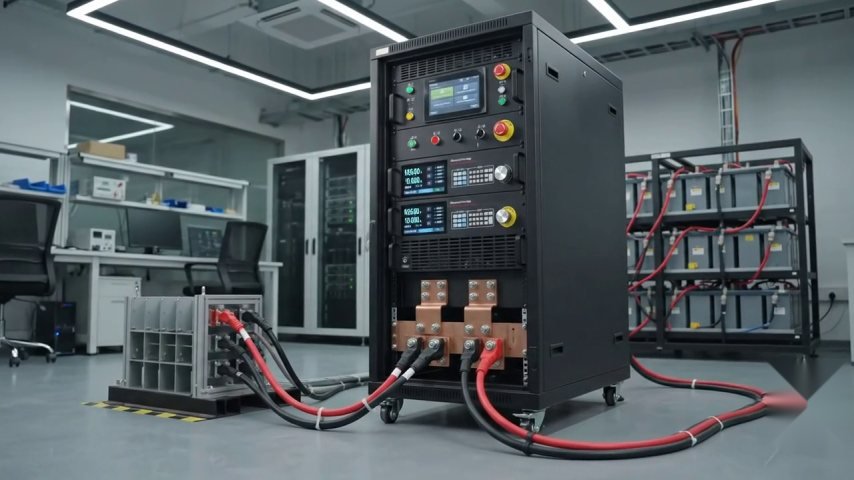
Both absorb power from a device under test — the difference is what happens to that power. A conventional electronic load converts it to heat; a regenerative load returns it to the grid.
Heat vs recovery
Dissipative loads need large heatsinks, fans or water cooling, and they pay twice: once for the test energy and again to remove the heat. A regenerative load recovers up to 93%, shrinking both bills.
When dissipative still makes sense
For small, intermittent loads the simplicity of a dissipative unit can win. At continuous or high power — battery cycling, ESS, burn-in — regeneration pays back quickly.
FAQ
How much can I save? Savings scale with power and duty cycle; at 93% regen a high-power continuous test recovers most of its energy versus near-zero for a dissipative load.